
By Elite Med Spa | Berwyn | Updated September 2026
You book microagujas, and somewhere in the conversation someone offers to add PRP for more money. Most people say yes because it sounds like the better version, or no because it sounds like an upsell. Neither is a decision. It is a guess.
The honest answer is that PRP earns its price for one specific problem and is optional for everything else. Here is the evidence, and here is how to tell which group you are in.
What PRP actually is
PRP stands for platelet rich plasma. A provider draws a small amount of your blood, spins it in a centrifuge, and separates out the plasma layer that carries a concentrated load of platelets. Platelets are not just for clotting. They release growth factors that signal tissue to repair itself.
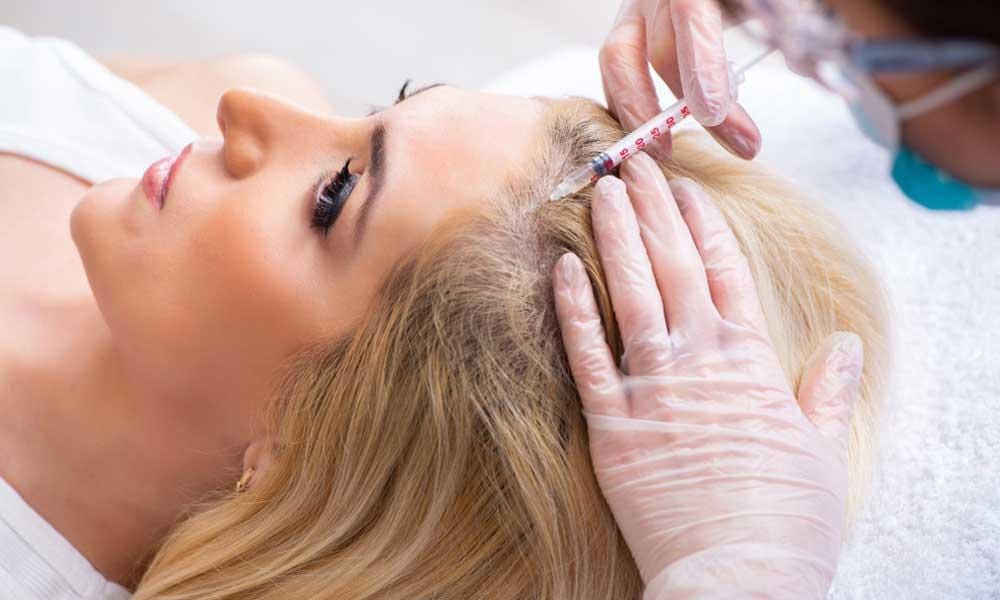
That concentrate is then either applied to the skin surface during and after microneedling, so it travels down the channels the needles created, or injected into the skin. Both approaches appear in the research. Topical application during microneedling is by far the more common version in a med spa setting.
The whole thing is autologous, meaning it comes from you. There is nothing synthetic in it, no filler, and nothing your immune system can react to as foreign. That is a real safety advantage and it is the reason PRP shows up in so many fields, from orthopedics to hair restoration.
What microneedling alone already does
Microneedling creates thousands of controlled micro injuries at a set depth. Your body treats each one as a small wound and responds by laying down new collagen. Over a series of sessions, that new collagen raises the floor of depressed scars and smooths texture.
This works on its own. SkinPen was the first microneedling device to earn FDA clearance, with an indication for improving the appearance of facial acne scars in adults 22 and older, based on a protocol of three treatments about a month apart. That clearance was earned without PRP in the protocol.
So the real question is not whether microneedling works. It is how much PRP adds on top of something that already works.
What the research says
This is one of the better studied add ons in aesthetics, and the picture is consistent.
A 2022 meta-analysis pooled 4 randomized and 10 split face controlled studies covering 472 patients with acne scars. Compared with microneedling without PRP, the combination was associated with roughly three times the odds of achieving more than 50 percent clinical improvement on Goodman’s qualitative scale, a significantly better mean score, and about four times the odds of patient reported satisfaction. Rates of severe redness and severe swelling were not meaningfully different between the two groups.
An earlier systematic review and meta-analysis covering 311 participants across eight studies found a statistically significant reduction in scar severity scores in favor of adding PRP to microneedling or subcision. Notably, that analysis found no significant difference in patient satisfaction between the groups, which is a useful counterweight to the number above.
The most recent synthesis, a 2026 systematic review with meta-analysis and trial sequential analysis, again found significantly greater improvement in atrophic acne scars with the combination than with microneedling alone, and roughly double the likelihood of more than 50 percent improvement. Adverse events including redness, swelling, pain, and hyperpigmentation were comparable between groups. The authors were direct about the limits: the accumulated sample size is still not sufficient for that second finding, protocols are not standardized, and larger trials with longer follow up are needed.
And the evidence is not unanimous. At least one trial in that same review found no added benefit from topical PRP alongside microneedling.
Read together, the fair summary is this. For atrophic acne scars, adding PRP produces a measurable improvement over microneedling alone, without adding meaningful risk. The effect is real but it is an improvement on an already effective treatment, not a different category of result. And the quality of the underlying evidence is moderate, not settled.
The part nobody mentions: not all PRP is the same product
This matters more than the headline studies and almost nobody brings it up.
PRP is not a standardized drug. It is a preparation, and what comes out of the centrifuge depends entirely on how it was made. The published literature is blunt about this. Reviews of PRP across specialties document wide variability in blood volume drawn, tubes used, anticoagulant, centrifuge, spin speed, spin time, temperature, whether an activator is added, and how the layer is pipetted off.
The gap that creates is not small. One 2026 comparison found commercial standardized centrifuge systems produced dramatically higher platelet concentrations than a routine laboratory centrifuge running the same samples. A systematic review of 75 randomized trials across 5,726 patients found the same variability problem and proposed a new scoring system just to make PRP quality reportable across studies.
Practical translation: PRP at one clinic and PRP at another can be biologically different products with the same name on the price list. If you are paying a premium for it, the fair question at consultation is what system is used to prepare it. A provider using a dedicated commercial kit should have no trouble answering.
Is PRP FDA approved for this
No, and you should understand what that does and does not mean.
PRP is not approved by the FDA as a drug or a biologic. What the FDA regulates is the hardware, meaning the centrifuges, tubes, and kits used to prepare it, many of which are cleared as medical devices. Aesthetic and dermatologic use of PRP is therefore off label, which is legal and common across medicine but is not the same as approved for that purpose.
This is not a reason to avoid PRP. It is a reason to be skeptical of anyone marketing it as an FDA approved treatment, because that claim is not accurate.
When PRP is worth the money
You have atrophic acne scars. This is where the evidence sits, and this is the answer the research supports most clearly. If indented scarring is your reason for booking, PRP is a defensible add on.
You want fewer total sessions. Better improvement per session can mean a shorter series. Run the math on the whole plan rather than the single appointment, because that is where the add on either pays for itself or does not.
You have already done a microneedling series and plateaued. Adding PRP to the next round is a reasonable next step before escalating to a more aggressive device.
You cannot tolerate downtime from stronger options. PRP intensifies microneedling without moving you into laser resurfacing territory and the recovery stays the same.
You are being treated for hair thinning. That is a different application with its own evidence base. Our Terapia con plasma rico en plaquetas (PRP) page covers it separately.
When to skip it
You want general glow, smaller looking pores, or a bit of texture refinement. The strong evidence is for acne scarring, not for routine rejuvenation. Standard microneedling delivers real results here on its own.
Your budget is fixed. This is the most useful reframe we can offer. If the add on means you can afford three sessions instead of five, skip the add on. Session count drives results in microneedling more than any single enhancement does. Three enhanced sessions rarely beat five solid ones.
Your actual problem is color, not texture. Brown marks, melasma, sun spots, and redness are pigment and vascular problems. A peeling químico o Lumecca IPL addresses those directly. Neither microneedling nor PRP is the efficient path.
You have significant skin laxity alongside the scarring. Adding growth factors to a treatment that is not deep enough for your concern does not fix the depth problem. Microagujas de radiofrecuencia Morpheus8 reaches further and adds tightening.
You are needle averse and the blood draw is a barrier. It is a small draw, but it is a draw. Plain microneedling is a perfectly good treatment and nobody should be talked past a real hesitation.
Side by side
| Microneedling alone | Microneedling with PRP | |
|---|---|---|
| How it works | Controlled micro injury triggers collagen | Same, plus your own concentrated growth factors |
| Evidence for acne scars | Strong, FDA cleared indication | Consistently better than alone in pooled analyses |
| Evidence for general rejuvenation | Good | Thin, mostly extrapolated |
| Appointment length | Shorter | Add roughly 15 to 20 minutes for the draw and spin |
| Extra steps | Ninguno | Blood draw and centrifuge |
| Falta del tiempo | 1 to 3 days of redness | Similar, no meaningful increase in serious effects |
| Typical series | 3 or more sessions | 3 or more sessions |
| Cost | Base price | Base price plus a per session premium |
| Best candidate | Texture, early lines, maintenance | Atrophic acne scars |
Does PRP add risk
Not much, and that is one of its genuine strengths. Because the material is your own blood, there is no allergy risk and no foreign substance involved. Across the pooled analyses, redness, swelling, pain, and hyperpigmentation occurred at comparable rates with and without PRP.
That last one matters here. Berwyn and the surrounding suburbs are heavily Hispanic, and a large share of our patients are Fitzpatrick IV and V. Post inflammatory hyperpigmentation is the most common bad outcome in aesthetic treatment of deeper skin tones, so a finding that an add on does not raise pigmentation rates is worth knowing. Microneedling is already one of the better options for melanin rich skin because it works mechanically rather than with heat, and PRP does not appear to change that.
PRP is not for everyone. Blood and platelet disorders, certain medications, active infection in the treatment area, and some ongoing medical conditions can rule it out. That screening happens at consultation, which is another reason to have the conversation in person rather than deciding from a price list.
What we tell patients at consultation
If you are here for acne scarring and you can afford it, add the PRP. The evidence supports it and it does not cost you downtime.
If you are here for maintenance, glow, or fine lines, put the money into more sessions instead.
If you are unsure, do your first session without it and your second with it. You will have your own comparison, which is worth more to you than any study average.
Session pricing for microneedling and PRP is on our menu and prices page, and it is worth checking the special offers page before booking a full series.
Preguntas frecuentes
Is PRP microneedling better than regular microneedling?
For atrophic acne scars, yes. Pooled analyses of controlled studies found significantly greater scar improvement and higher rates of more than 50 percent improvement when PRP was added to microneedling, without a meaningful increase in serious side effects. For general skin rejuvenation the evidence is much thinner.
How much does PRP add to a microneedling session?
It adds a per session premium on top of the base microneedling price, and about 15 to 20 minutes to the appointment for the blood draw and centrifuge. Current pricing is on our menu and prices page.
Is PRP FDA approved for skin treatments?
No. PRP is not approved as a drug or biologic. The FDA regulates the centrifuges, tubes, and kits used to prepare it as medical devices. Aesthetic use of PRP is off label, which is legal and common but not the same as approved.
Does PRP microneedling hurt more?
No. The needling portion is the same. PRP adds a small blood draw beforehand. Some people find the plasma soothing on treated skin.
How many PRP microneedling sessions do I need?
Most acne scar protocols run three or more sessions spaced about a month apart, with collagen remodeling continuing for months after the last session. Your provider sets the number after seeing how your skin responds.
Is PRP safe for darker skin tones?
Yes. Across pooled studies, hyperpigmentation and other adverse events occurred at comparable rates with and without PRP. Microneedling itself is well suited to deeper skin tones because it works mechanically rather than with heat.
Is the PRP at every clinic the same?
No. Published reviews document wide variation in how PRP is prepared, including centrifuge type, spin speed, spin time, and handling, and those differences change the platelet concentration in the final product. It is fair to ask what system your provider uses.
Should I choose PRP or Morpheus8?
They solve different problems. PRP enhances microneedling. Morpheus8 adds radiofrequency energy to reach deeper and add tightening. If your concern is scarring with laxity, Morpheus8 is usually the better starting point.
Book a free consultation in Berwyn
Elite Med Spa offers SkinPen microneedling, Morpheus8 RF microneedling, PRP therapy, chemical peels, and Lumecca IPL at 6203 Cermak Rd in Berwyn. We see patients from Cicerón, Parque de roble, Orilla, Parque forestal, and across the western suburbs.
Bring your questions about PRP and we will tell you honestly whether your skin needs it.
Call 855-293-1033 or book a free consultation online.

Deja un comentario