
Written by the Elite Med Spa Team | Berwyn, IL
Every so often a patient arrives for a laser session and we send them home without treating. It is never a pleasant conversation. They took time off, they drove here, and now someone is telling them to come back in three weeks.
We do it anyway, because the alternative is worse. A burn, a blister or a patch of post inflammatory hyperpigmentation can take months to resolve, and some pigment changes do not fully resolve at all. A rescheduled appointment costs you an afternoon. A pigment complication can cost you a year.
This post walks through the questions on our intake form, what each one is actually screening for, and what happens if the answer is the wrong one. It is written partly so patients understand why we ask, and partly so you know what to expect from any clinic you visit. If a provider is not asking these, that is information.
Have you been in the sun, in a tanning bed, or used self tanner in the last four weeks?
This is the question people most often answer inaccurately, usually without meaning to.
Both laser and intense pulsed light work by targeting melanin. When your skin has more melanin in it than usual because of recent sun exposure, more of that energy is absorbed at the surface rather than at the intended target. The result is a higher risk of burns, blistering and pigment change.
For Lumecca IPL, the standard requirement is no meaningful sun exposure and no tanning for about four weeks beforehand. Critically, this includes spray tan and self tanner. Self tanner is the answer people forget to give, because it does not feel like sun exposure. It deposits pigment in exactly the layer we are trying to protect, and it will cause the device to behave as if your skin type is different than it is.
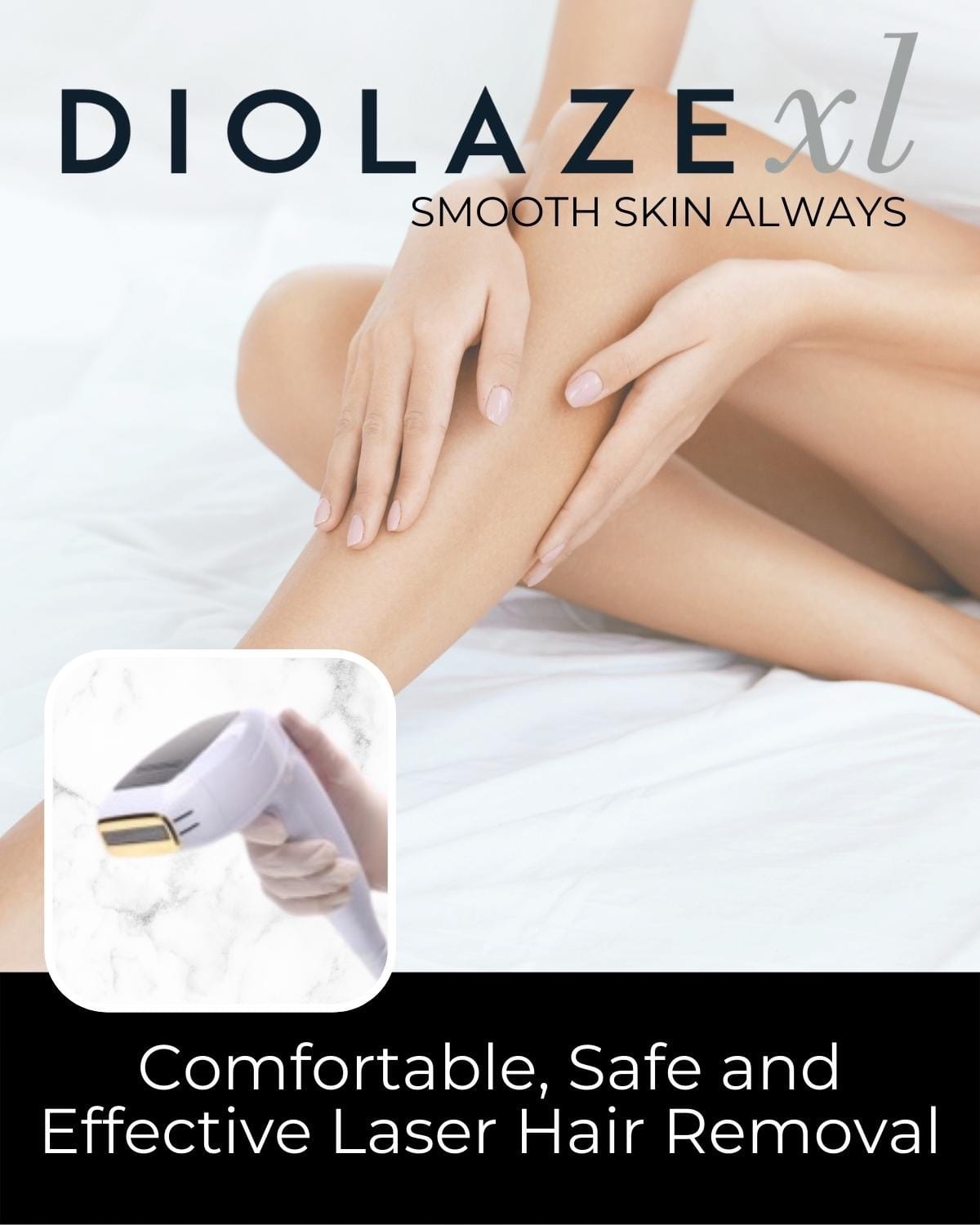
For Diolaze XL laser hair removal, the window is generally two to four weeks depending on the device and your skin type.
You should also plan on avoiding sun exposure and using SPF 30 or higher for weeks after treatment, which is why we schedule these treatments in the cooler months whenever a patient’s calendar allows.
Have you taken isotretinoin in the last six months?
Isotretinoin, most widely known by the brand name Accutane, is the one question where we will not negotiate.
The standard guidance in dermatology references and in the drug labeling is to discontinue isotretinoin for six months before cosmetic procedures including waxing, dermabrasion, chemical peels and laser procedures, because of concern about abnormal healing and scarring. The FDA advises patients directly to avoid these procedures during treatment and for at least six months afterward.
It is worth being honest that the strength of the evidence behind this protocol has been debated in the literature, and some newer reviews question how large the risk actually is. Our position is that a six month wait costs you very little and the downside if the concern is valid is scarring, which is permanent. So we follow the conservative protocol.
Please tell us even if you finished the course five months ago. Especially then.
Have you waxed, threaded, plucked or used depilatory cream in the last four weeks?
This one is not a safety question. It is an efficacy question, and it means the difference between a session that works and a session you wasted money on.
Laser hair removal targets the pigment in the hair shaft and root. The shaft acts as a conduit that carries heat down to the follicle structures. If you have waxed, threaded, plucked or used a chemical depilatory, you have removed the target. The laser fires and finds nothing to absorb it.
Shaving is completely fine and is in fact required. Shaving cuts the hair at the surface and leaves the root in place. Shave the treatment area roughly 12 to 24 hours before your appointment. Arriving with visible hair above the skin means that hair absorbs energy at the surface, which hurts more and increases burn risk with no upside.
Avoid all root removing methods for the entire course of treatment, not just before the first session.
What actives are you using on your skin?
Retinoids and acids thin the outermost layer of the skin and increase photosensitivity. Treating over them raises the risk of irritation, burns and unpredictable results.
We generally ask patients to stop topical retinoids, tretinoin, adapalene, glycolic acid, salicylic acid, lactic acid, vitamin C and any brightening or bleaching agents on the treatment area for about five to seven days before treatment, and some protocols call for longer.
This applies to chemical peels as well as to light based treatments, and it applies in the other direction too. We space peels and laser sessions apart rather than stacking them within the same week.
If you are not sure whether something in your routine counts, bring the products or photograph the labels. It takes thirty seconds at the consult and it prevents a rescheduled appointment.
Are you taking any photosensitizing medication or supplement?
Several common medications increase the skin’s sensitivity to light, and patients rarely think to mention them because they were prescribed for something unrelated.
Tetracycline and doxycycline are the ones we see most often, frequently prescribed for acne, which means the patient in front of us is often taking one. Certain other antibiotics, some diuretics, some antifungals and some psychiatric medications also carry photosensitizing effects. St John’s wort is a common supplement with the same issue.
Never stop a prescribed medication in order to get a cosmetic treatment. Tell us what you are taking and we will either adjust the plan or reschedule around the course. That is the correct order of priorities.
Do you get cold sores, and where?
Light based treatment around the mouth can reactivate herpes simplex in patients with a history of cold sores. This is well documented and entirely preventable.
If you have a history, we arrange prophylactic antiviral coverage before treating the perioral area. If you have an active outbreak anywhere on the face, we reschedule.
The same logic applies to any active infection, and to active eczema or psoriasis in the treatment area. Treating over inflamed or compromised skin is asking for a complication.
The remaining questions, quickly
Are you pregnant or breastfeeding? We defer light based treatments and most peels. The evidence of harm is limited, but the risk to benefit calculation for an elective cosmetic procedure is obvious.
Do you have a history of keloid or hypertrophic scarring? This changes what we are willing to do and at what settings.
Do you have a history of skin cancer, or any suspicious or changing moles? Anything concerning goes to a dermatologist before it goes near a device. We will not treat over a lesion we cannot identify.
Have you had filler or neuromodulator in the treatment area recently? We generally separate injectables from light based treatment in the same area by around two to four weeks in either direction.
Do you have tattoos or permanent makeup in the area? Laser light interacts with tattoo pigment, and we work around it.
Have you had a recent chemical peel or other laser treatment in the area? We space these out rather than stacking.
Why we patch test, and when
For patients with medium to deep skin tones, for anyone with a history of pigment reactions, and for first sessions on a new device or an unusual area, we treat a small test spot and assess the response before committing to a full treatment.
This adds a visit. It is worth it. A test spot converts a guess into information, and the entire reason light based treatments carry pigment risk is that fluence appropriate for one patient is not appropriate for another.
Anyone treating deeper skin without testing first is relying on the settings being right the first time on a patient they have never treated, which is not a bet you should let someone make with your face.
When the honest answer is a different treatment
Sometimes screening surfaces the fact that the treatment the patient asked for is not the one their concern requires.
Broad spectrum light is generally most effective and lowest risk on Fitzpatrick types I through III. For deeper skin tones, pigment concerns often respond better to a conservative peel series and disciplined sun protection than to IPL.
Concerns that are textural rather than pigmentary, such as etched lines and acne scarring, respond to collagen stimulation rather than to light targeting pigment. Morpheus8 RF microneedling and SkinPen microneedling address that layer.
And sometimes the right first step is simply a course of gentler treatments while we get the skin into a state where a more aggressive one is safe. That is not a stall. Pre conditioning skin before a stronger treatment measurably reduces complication risk.
You can see the full range on our aesthetics services page or from the Elite Med Spa home page.
Book a Consultation and Bring Your Medication List
Elite Med Spa is at 6203 Cermak Road in Berwyn, IL 60402, serving Berwyn, Cicero, Oak Park, Riverside, Brookfield, La Grange, Oak Lawn and the surrounding suburbs. New clients get a free consultation.
Call 855-293-1033 or reach us through our contact page. We are open Monday through Friday from 9 AM to 4 PM and Saturday from 9 AM to 2 PM.
Bring a list of your medications, supplements and skincare products to your consultation. Five minutes of screening at the front end is what keeps a laser series uneventful, and it is the difference between a plan built for your skin and a plan built for an average one.


Leave A Comment