
Written by the Elite Med Spa Team | Berwyn, IL
It is one of the most common conversations we have. A patient comes in around week nine or ten, says the movement is back, and asks whether they got a bad batch. Sometimes there is an edge of suspicion to it, which is fair. You paid for something and it did not last as long as the internet said it would.
The internet said three to six months. Your result read closer to nine weeks. Both of those can be true, and in almost every case the explanation is one of six specific and identifiable variables rather than a defective product.
Here is what we actually look at when someone tells us their Botox faded early.
First, what the normal range really is
The commonly cited number is three to four months, with some patients reporting longer. But that average hides an enormous spread, and there are two specific situations where a shorter result is completely expected.
The first is a first time treatment. Many patients find their first round fades faster than subsequent ones. The muscles are at their strongest and most conditioned at the start. With repeated treatments over time, the treated muscles tend to weaken somewhat, and duration between sessions often lengthens as a result. If this was your first appointment, nine weeks is not an alarm bell.
The second is the treatment area, which we will get to shortly, because it is probably the single largest factor and almost nobody asks about it up front.
Variable one: your metabolic rate
Botulinum toxin does not stay in your body indefinitely. Nerve terminals regenerate through a process called sprouting, and how fast that happens varies between people.
Patients with a higher basal metabolic rate, which includes many athletes, distance runners and people with very active thyroid function, often report shorter duration from the same dose. Frequent high intensity exercise appears to compound this, because sustained increases in blood flow and metabolic activity are associated with faster breakdown.
This is worth putting in perspective. It does not mean exercise cancels Botox out, and it is not a reason to train less. Most providers agree that moderate exercise makes little practical difference. But if you are doing five hard sessions a week and you are on the shorter end of the duration range, those two facts are probably related, and it is a dosing conversation rather than a reason to be suspicious of the product.
Variable two: how strong the muscle is
This is the one that gets missed most often. A neuromodulator has to be dosed against the muscle it is treating, and muscles are not the same size or strength from person to person.
A patient with a heavy, well developed frontalis or a strong glabellar complex needs more units to achieve the same degree of relaxation than someone with a fine muscle. If they receive the same textbook dose, the stronger muscle will break through sooner. The comparison we use with patients is that it takes more to stop a freight train than a bicycle.
Men frequently need higher dosing for this reason. So do people who clench, and people whose facial expression is naturally very animated. If you are the person in every photo with the biggest smile and the most active brow, your Botox is working against more input than your friend’s is.
Variable three: which area was treated
Duration is not uniform across the face, and the differences are large.
Crow’s feet and areas around the eyes often hold well. The forehead, which is involved in nearly every facial expression you make, tends to fade earlier. The lower face fades fastest of all. A lip flip, which uses a very small amount of product in muscles that are in near constant motion for eating, speaking and smiling, is notoriously short lived and is often reported in the range of six to eight weeks.
So the first question we ask when someone says their Botox lasted nine weeks is which areas were treated. If the answer includes a lip flip or a masseter, nine weeks may be exactly on schedule for that area even if the forehead is still perfectly relaxed.
Variable four: the number of units, which is often the real answer
This is uncomfortable but important. Under dosing is a common cause of short results, and it usually happens for one of two reasons.
The first is price. If a patient asks to keep the cost down, the tempting move is to reduce units. That does produce a cheaper appointment. It also produces a result that fades faster, which means more appointments per year, which is more expensive overall.
The second is a request for a light or natural look. That is a legitimate goal, and there are good ways to achieve it. But if the approach is simply to use less product across the board, the muscle regains motion sooner. Achieving a soft result usually has more to do with placement and area selection than with cutting the dose everywhere.
We document units per area at every appointment for this exact reason. When a patient tells us the result was short, the first thing we do is look at what they actually received last time. Very often the answer is that the dose was reasonable for an average patient and not reasonable for this particular patient, and we adjust upward at the next round.
Variable five: placement and technique
Precise placement into the correct muscle belly, at the correct depth, produces a more consistent and more durable result than product that partially diffuses into surrounding tissue. This is not a subtle effect. It is the reason two injectors using the same number of units of the same product can produce noticeably different outcomes on the same face.
Handling matters too. Botulinum toxin is temperature sensitive and must be stored and reconstituted correctly. This is not something you can verify as a patient, which is a good reason to be cautious about treatment in non clinical settings or at prices that seem impossible.
Variable six: stress, clenching and heat
Stress is a real and underrated factor, because of what it makes your face do. People under sustained stress clench their jaws and furrow their brows constantly and unconsciously. That is continuous micro exercise of exactly the muscles you paid to relax, and it can shorten the practical duration of the result.
Frequent sauna use and hot yoga are also worth mentioning. Heavy heat exposure and anything that substantially increases circulation may play a minor role. It is not the main driver, but if you are already on the short end, it is one more input.
Antibody formation, which patients sometimes raise, is genuinely rare and is usually not the explanation. It is worth investigating only after the ordinary variables have been ruled out.
What we do about it at the next appointment
Here is our actual process rather than a generality.
We check the record. Units per area from the last session, injection points, and the two week follow up photos if we have them.
We ask about the timeline in detail. Not just when it wore off, but when it came on. If onset was late as well as offset early, that points toward dosing. If onset was normal and duration was short, that points more toward metabolism and muscle strength.
We adjust the dose for the specific areas that faded, rather than raising everything uniformly.
We reset expectations for first time patients. If this was round one, we say plainly that round two often lasts longer.
And we schedule realistically. Chasing a longer interval by waiting until movement fully returns tends to mean starting from scratch every time. A consistent schedule generally produces a better outcome than an opportunistic one.
When more units is the wrong answer entirely
Sometimes a patient tells us their Botox stopped working, and when we look at the face, the product is working fine. What has changed is that the lines they are unhappy about are no longer dynamic.
A dynamic line appears when you move. A static line is there at rest. Botox addresses the first one. It does very little for the second one, and no amount of additional product will change that.
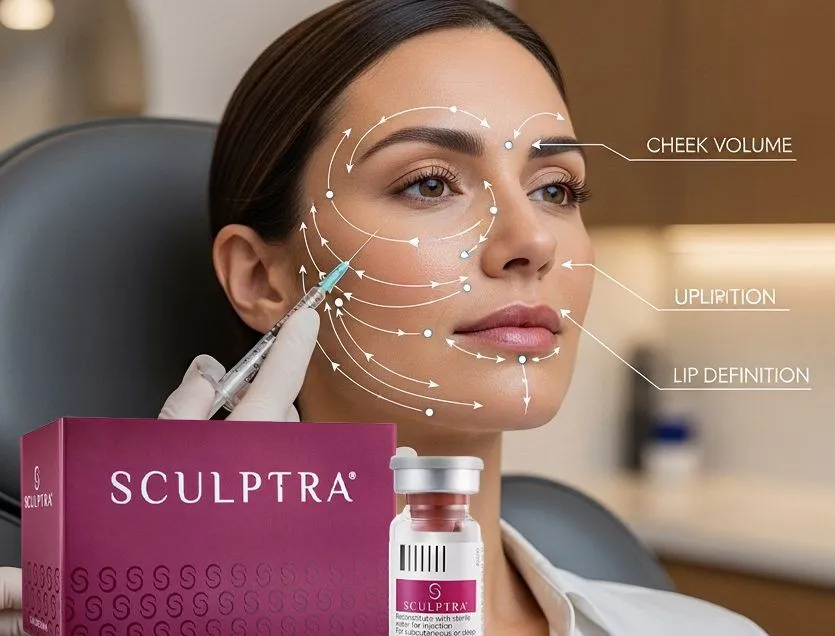
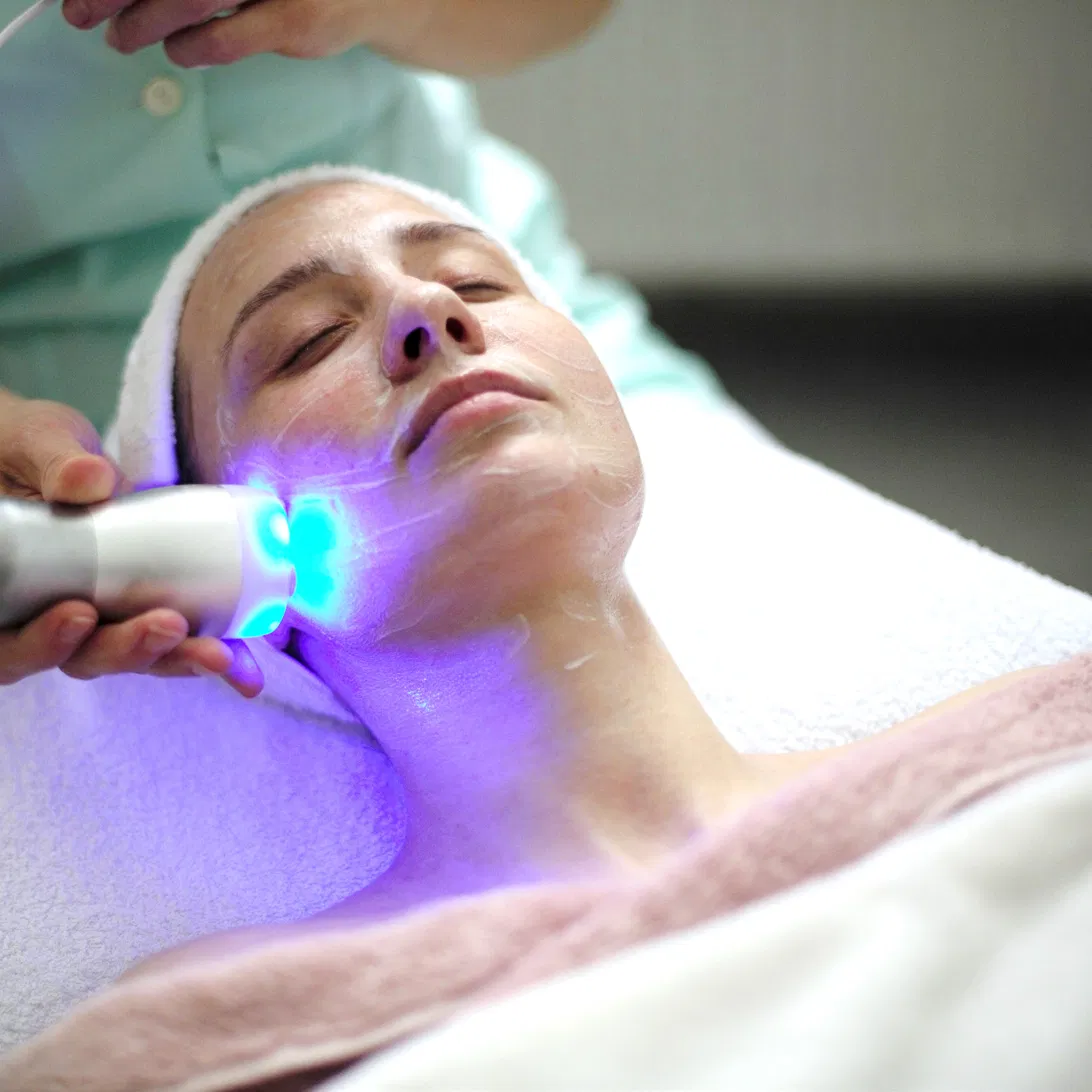
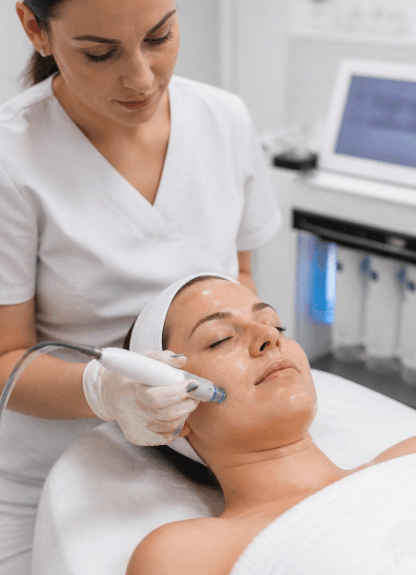
When lines are etched at rest, the answer is usually resurfacing or volume rather than more neuromodulator. Morpheus8 RF microneedling and SkinPen microneedling work on the skin itself, stimulating collagen to soften texture and etched lines over a series. Dermal fillers restore volume where loss is creating shadow and folds. Sculptra works differently again, stimulating gradual collagen production over months rather than filling immediately.
Continuing to add units to a problem that units cannot solve is the most common way patients end up frustrated and overtreated. We would rather tell you that at the consult. You can see the full range on our injectables page.
Bring Your Last Treatment Record In
Elite Med Spa is at 6203 Cermak Road in Berwyn, IL 60402, serving Berwyn, Cicero, Oak Park, Riverside, Brookfield, La Grange, Oak Lawn and the surrounding suburbs. New clients get a free consultation.
Call 855-293-1033 or reach us through our contact page. We are open Monday through Friday from 9 AM to 4 PM and Saturday from 9 AM to 2 PM.
If your last round faded early, book a consultation and bring whatever documentation you have from your previous provider. Units, areas and dates are enough for us to figure out what happened and to build a plan that holds.



Leave A Comment