
By Elite Med Spa | Berwyn | Updated September 2026
Both of these treatments exfoliate. That is where the similarity ends.
Dermaplaning removes things that are sitting on your skin. A chemical peel changes the skin itself. One is a blade. One is an acid. They solve different problems, and the reason people end up disappointed is almost always that they booked the one that does not solve theirs.
Here is how to tell which one you need, without the marketing.
The difference in one sentence
Dermaplaning takes off what is already dead. A chemical peel injures living skin on purpose so it rebuilds.
Everything else in this article follows from that.
What dermaplaning actually is
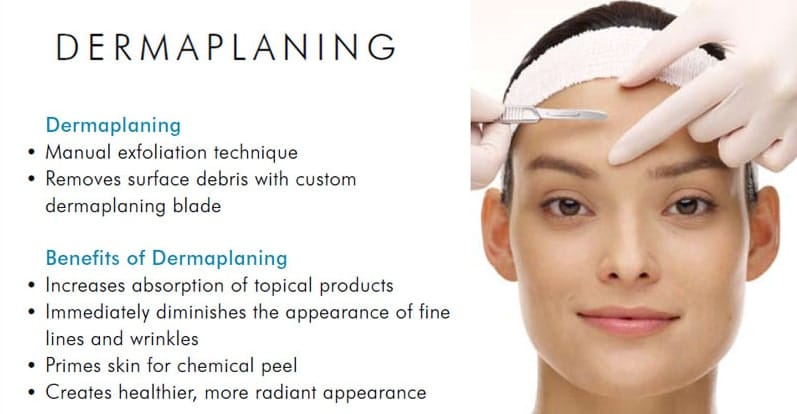
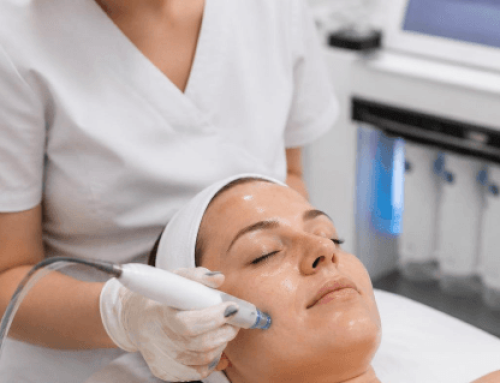
Dermaplaning is mechanical exfoliation. A provider holds a sterile single edge blade at a shallow angle and moves it across your skin in short, light strokes. Two things come off. The first is the stratum corneum, which is the flat layer of dead cells sitting on the surface. The second is vellus hair, the fine, soft hair most people call peach fuzz.
That is the whole treatment. It takes about twenty to thirty minutes. There is no heat, no chemical, no needle, and no downtime. You walk out with skin that feels noticeably smoother than it did when you walked in, and that smoothness is real, not a lighting trick.
It is also entirely a surface treatment. Dermaplaning works within the epidermis. It does not reach the dermis, so it does not trigger collagen production, and it does not change anything structural about your skin. The effect lasts roughly three to four weeks, because that is about how long your skin takes to rebuild the layer that was removed.
The blade matters more than most people realize. Professional dermaplaning uses a surgical grade blade that is not sold for consumer use, held by someone trained in the correct angle. Too shallow and nothing lifts. Too steep and you get nicks instead of exfoliation. The drugstore tools marketed as dermaplaners are deliberately duller and guarded, which makes them safer and also much less effective at the part that actually matters.
What dermaplaning is good at
Instant smoothness. Skin feels different the same day.
Peach fuzz. Nothing else on a facial menu removes vellus hair, and for a lot of people that fuzz is the actual complaint.
Makeup application. Foundation stops catching on fine hair and surface flakes, which is why brides and anyone getting photographed book it.
Product penetration. Serums reach skin instead of dead cell buildup.
Dullness. Removing the dead layer makes light reflect evenly, which reads as brightness.
What dermaplaning does not do
It does not fade brown spots, melasma, or post acne marks. Pigment lives deeper than the layer a blade reaches.
It does not soften wrinkles.
It does not improve acne scars.
It does not tighten anything.
It does not permanently remove hair.
If your complaint is any of those, dermaplaning is the wrong booking. That is not a knock on the treatment. It is a very good treatment that is asked to do jobs it was never built for.
What a chemical peel actually is
A chemical peel uses acid to break the bonds holding skin cells together. At low strength it lifts the same dead surface layer dermaplaning removes. At higher strength it causes controlled injury into the living layers, and your skin responds by building new tissue as it heals. That healing response is what changes pigment, texture, and fine lines.
Peels are classified by depth, and depth is the entire story.
A superficial peel works in the epidermis. Glycolic, salicylic, lactic, and mandelic acids usually sit here. These are the peels used for dullness, clogged pores, active acne, and discoloration. Flaking is mild or invisible.
A medium peel reaches through the epidermis into the upper dermis. Trichloroacetic acid at moderate strength is the common choice. This is the depth where shallow acne scars and real texture change start to happen. Expect several days of visible peeling.
Deeper techniques exist, including focal application of high strength acid into individual scars, but those are dermatology office procedures with real risk, not spa facials.
There is also a second thing peels do that dermaplaning cannot. Salicylic acid is oil soluble, which means it gets inside the pore rather than just working on top of it. That makes it the better choice when you have active breakouts and congestion, not just surface roughness.
What the research says about depth
The evidence backs up the depth rule rather than any one acid. A 2025 scoping review covering 34 studies published between 2002 and 2025 on trichloroacetic acid for atrophic acne scars found low concentrations used for texture irregularities, medium concentrations for shallower atrophic lesions, and high concentration focal application reserved for deep scars.
Glycolic acid, the most common med spa peel, is consistently described in reviews as effective for texture, hyperpigmentation, mild sun damage, and acne, and less effective for deep wrinkles or deep scars. That is a useful and honest ceiling to know before you book.
The pattern across the literature never changes. More depth means more correction, more downtime, and more risk. Nobody gets one without the others.
Side by side
| Dermaplaning | Chemical peel | |
|---|---|---|
| Method | Sterile blade, mechanical | Acid solution, chemical |
| Depth reached | Surface of the epidermis | Epidermis to upper dermis, depending on strength |
| Removes facial hair | Yes | No |
| Fades discoloration | No | Yes |
| Improves fine lines | No | Yes, at medium depth |
| Improves acne scars | No | Mild to moderate, at medium depth |
| Helps active acne | No, and can make it worse | Yes, especially salicylic acid |
| Downtime | None | None to about a week |
| Result visible | Same day | Over days to weeks |
| How long it lasts | Three to four weeks | Cumulative over a series |
| Feels like | Light scraping, painless | Stinging and heat for a few minutes |
| Safe on all skin tones | Yes | Yes, with the right acid and strength |
Which one for which concern
Peach fuzz. Dermaplaning. Nothing else does this.
Dull, rough, flaky skin with no other complaint. Either. Dermaplaning is faster and has zero peeling. A peel series gives a bigger cumulative change.
Brown marks left by old breakouts. Chemical peel. This is one of the strongest uses of a peel and dermaplaning will not touch it.
Melasma. Chemical peel, chosen carefully, as part of a longer plan. Melasma is stubborn and comes back with sun exposure, so treatment is management rather than a cure.
Active breakouts. Chemical peel with salicylic acid. Do not dermaplane over active acne.
Clogged pores and blackheads. A HydraFacial MD or a salicylic peel. Extraction is a different job from exfoliation.
Acne scars you can feel with your fingertips. Neither, as a primary treatment. Indented scars need collagen rebuilt at depth, which means SkinPen microneedling or Morpheus8 RF microneedling.
Redness, broken capillaries, or sun spots. Light based treatment. Lumecca IPL targets pigment and vessels directly.
A wedding, a shoot, or an event on Saturday. Dermaplaning, three to five days ahead. A peel this close to an event is a gamble because you cannot control exactly when you flake.
You want the smoothness of dermaplaning plus a serum driven into the skin. A DiamondGlow facial exfoliates and infuses a targeted serum in the same pass.
The peach fuzz question everyone asks
No, dermaplaning does not make hair grow back thicker or darker. This is the most persistent myth in skin care and it is biologically wrong.
Hair thickness, color, and growth rate are controlled by the follicle, which sits below the surface of the skin. A blade passing across the surface cuts the hair shaft and never touches the follicle. Nothing about the growth cycle changes.
What does change is the shape of the cut end. Untouched vellus hair tapers to a fine point. A cut hair has a blunt tip. A blunt tip catches light differently and feels coarser to the touch for a few days as it grows out. That sensation is the entire basis of the myth. The hair is the same hair.
If you actually want the hair gone rather than reset every month, that is a different treatment. Diolaze XL laser hair removal targets the follicle itself, which is what permanent reduction requires. Worth knowing that laser works on pigmented hair and does not treat true vellus hair well, so a consultation should come before you assume it is the answer.
Who should skip dermaplaning
Dermaplaning has a reputation as the gentlest thing on the menu, and for most skin that is fair. It still has real contraindications.
Active inflammatory or cystic acne. A blade passing over pustules can spread bacteria across the face and make things worse. Get the acne controlled first.
Active rosacea flare. Exfoliating inflamed skin adds insult to injury.
Eczema or active dermatitis in the treatment area. Same reason.
A history of cold sores. Treatment can trigger an outbreak. Tell your provider so you can pretreat.
Recent peel, laser, or strong retinoid use. The barrier needs to recover first.
Isotretinoin. Providers generally wait a set period after finishing the course.
Even in the right candidate, temporary redness, dryness, mild irritation, a small breakout, or folliculitis can happen. These are not common and they are not serious, but honest expectations matter more than a sales pitch. Anything that concerns you afterward is worth a call rather than a wait.
Why this comparison matters more for deeper skin tones
Berwyn and the surrounding suburbs are heavily Hispanic, and a large share of our patients are Fitzpatrick IV and V. That changes the calculus in a way most articles on this topic ignore.
Melanin rich skin responds to inflammation by making pigment. Any treatment that inflames the skin can leave a dark mark behind, and that mark can outlast whatever you were treating in the first place. It is the most common bad outcome in aesthetic medicine for skin of color.
Dermaplaning is unusually well suited here, precisely because it does so little. No heat. No chemical. No inflammatory cascade. Removing dead cells and vellus hair brightens the complexion immediately without asking melanocytes to react to anything.
Peels are absolutely usable on deeper skin tones, but acid choice stops being a detail and becomes the treatment. Dermatology guidance for skin of color generally favors salicylic acid as the safest superficial option, with mandelic and lactic acid also well regarded, because they penetrate slowly and provoke less inflammation. Higher strength trichloroacetic acid gets used with much more caution. Priming the skin beforehand and strict daily sunscreen afterward are not optional extras, they are the difference between a good result and a new problem.
If a previous peel or laser anywhere left you darker than you started, say so at consultation. That history changes what we recommend.
Can you do both
Yes, and there is a real reason to.
Dermaplaning immediately before a peel removes the dead layer that would otherwise slow the acid down. The peel then works more evenly and penetrates more efficiently. Some practices call the combination a micropeel. Done well, you get a better result from a gentler acid.
The caveat is that the same effect that improves the result also raises the risk. A peel that would be mild on unprepared skin behaves like a stronger peel on freshly dermaplaned skin. This is a call for your provider to make based on your skin type and history, not something to improvise or stack yourself at home. On deeper skin tones the extra caution is warranted.
What you should not do is dermaplane at home a day or two before a professional peel and say nothing. Your provider is choosing a strength based on the barrier they think they are treating.
Spacing outside of a planned combination is simple. Give the skin about two weeks between a peel and a dermaplaning session in either direction. Dermaplaning on its own is commonly repeated every four weeks, roughly when the vellus hair returns, and can be done as often as every two weeks in some skin.
Pregnant or nursing
This comes up constantly, and it is a genuinely good use case for dermaplaning. Retinoids are off the table during pregnancy and several peel ingredients are restricted or advised against. Dermaplaning introduces nothing into the body, so it is one of the few exfoliation options that stays available. Confirm with your OB first, and tell your provider so the rest of your appointment is adjusted too.
How we would actually advise you
If your main complaint is that your skin looks dull and your makeup sits badly, start with dermaplaning. It is the fastest, cheapest, lowest risk fix for that exact problem, and you will know within a day whether it was what you wanted.
If your main complaint is color, uneven tone, or old marks, start with a peel series. Three to six sessions about four weeks apart is a typical plan. Dermaplaning between peels keeps the surface smooth while the acid does the deeper work.
If your main complaint is texture you can feel, neither is your primary treatment. Book a consultation and ask about microneedling.
Current pricing for all of these is on our menu and prices page, and there is usually something relevant on our special offers page worth checking before you book.
Frequently asked questions
Is dermaplaning or a chemical peel better?
Neither is better. They do different jobs. Dermaplaning removes dead surface cells and fine facial hair for immediate smoothness. A chemical peel uses acid to reach deeper and treat discoloration, fine lines, and texture over a series of sessions.
Does dermaplaning make hair grow back thicker or darker?
No. The blade cuts hair at the surface and never touches the follicle, which is what controls thickness, color, and growth rate. Cut hair has a blunt tip instead of a tapered one, which can feel coarser for a few days, but the hair itself is unchanged.
Can you get dermaplaning and a chemical peel on the same day?
Yes, when a provider plans it. Dermaplaning first removes the dead layer and lets the acid work more evenly, which also makes the peel act stronger. It should not be improvised, and it is not appropriate for every skin type.
How often should you get dermaplaning?
Most people repeat it about every four weeks, which is roughly when vellus hair grows back and the surface layer rebuilds. Some skin tolerates every two weeks. More often than that offers no extra benefit and can irritate the barrier.
Does dermaplaning help acne?
No. Dermaplaning does not treat active acne and a blade passing over active breakouts can spread bacteria and worsen them. A salicylic acid peel is the better choice when acne is active.
Is dermaplaning safe for brown and olive skin?
Yes. It uses no heat and no chemicals, so it does not create the inflammation that drives post inflammatory hyperpigmentation in deeper skin tones. It is one of the safest exfoliation options for Fitzpatrick IV to VI skin.
How long does dermaplaning last?
About three to four weeks. That is how long your skin takes to rebuild the surface layer that was removed and for vellus hair to grow back to its previous length.
Which one should I book first?
Book a free consultation. We look at your skin, ask what is actually bothering you, and tell you which treatment addresses it. Sometimes the answer is neither of these two.
Book a free consultation in Berwyn
Elite Med Spa offers dermaplaning, chemical peels, HydraFacial MD, DiamondGlow, SkinPen microneedling, Morpheus8, and Lumecca IPL at 6203 Cermak Rd in Berwyn. We see patients from Cicero, Oak Park, Riverside, Forest Park, and across the western suburbs.
Tell us what is bothering you about your skin and we will tell you honestly which treatment fits, including when the answer is to wait.
Call 855-293-1033 or book a free consultation online.

Leave A Comment