
Most people arrive at a med spa having already decided what they want. They saw a video about Morpheus8, or a friend got filler, or an ad for laser hair removal came up three times in one week. Then they book that specific treatment and hope it addresses the thing that was actually bothering them.
Sometimes it does. Often it does not, because the treatment that gets marketed the hardest is not always the treatment that fixes your particular concern.
This guide runs the other direction. It starts with what is bothering you, maps that to the treatments that actually address it, and gives you the honest trade-offs on each: how many sessions, how much downtime, when you see results, how long they last, and who each treatment is not appropriate for. It also covers how to vet a med spa, what a real consultation looks like, and the difference between the claims you will see in advertising and what the underlying regulatory language actually means.
Written by the team at Elite Med Spa, 6203 Cermak Rd, Berwyn, Illinois. Consultations are free, and the point of one is to build a plan, not to sell you a package. Call 855-293-1033.
This guide is educational and general. It is not medical advice, and nothing here substitutes for an in-person assessment by a qualified provider who has looked at your skin and taken your medical history.
Start Here: The Questions That Decide Everything
What is actually bothering you?
Be specific, and describe the problem rather than naming a treatment. There is a real difference between these:
- “My forehead lines show when I raise my eyebrows” is a dynamic line, and it is a muscle problem
- “My forehead lines show even when my face is still” is an etched line, and it is a skin problem
- “I look tired” is often volume loss or under-eye hollowing, not wrinkles at all
- “My skin looks dull” is usually texture and surface cell turnover
- “My skin looks blotchy” is pigmentation, vascular redness, or both, and they are treated differently
The distinction matters because those five complaints route to five different treatments. A relaxing injectable will do nothing for an etched line that has no muscle movement behind it. Resurfacing will do nothing for volume loss. Getting the diagnosis right is most of the work.
Bring photographs of yourself from five and ten years ago to your consultation. Providers find them far more useful than a description, because they show what has actually changed rather than what you have started noticing.
How much downtime can you actually take?
This is the constraint that eliminates options fastest, and it is worth being honest with yourself rather than optimistic.
- None. You have a job with a camera on, or an event this week. Facials, dermaplaning, HydraFacial, DiamondGlow, and most injectables fall here, though injectables can bruise.
- A few days of looking flushed. Microneedling, light peels, IPL. You can work, you may not want to be photographed.
- A week or more. Deeper resurfacing, RF microneedling at aggressive settings, and treatments like fat-dissolving injections where swelling is expected and significant.
There is no treatment that delivers dramatic change with zero recovery. Anything advertised that way is either not doing much or not telling you everything.
What is your timeline?
Working backward from a date changes the plan completely.
- Wedding, reunion, or photographed event. Nothing new within two weeks of the date, and ideally nothing new within a month. Series treatments need to start three to six months out
- No deadline. You can do things properly, in the right order, with proper spacing
- You want to start prevention early. Different conversation entirely, and a legitimate one
What shape is your budget?
Med spa treatments price in three different ways, and the difference matters more than the headline number.
- Per unit. Neuromodulators are priced per unit, so your cost depends on how much your particular anatomy requires. A quoted per-unit price without an estimate of units is not a quote
- Per session, in a series. Most energy-based treatments require a course. A single session price times one is not what the treatment costs. Ask for the full series cost
- Ongoing maintenance. Some results fade and need repeating on a schedule. Budget for the year, not the appointment
Memberships exist specifically because maintenance treatments repeat. If you are committing to something that needs upkeep, ask how membership pricing changes the annual number.
What is your skin type?
This is a safety question, not a cosmetic one, and it is covered in its own section below because it genuinely matters for anything involving light or laser.
What should your provider know about you?
Bring this information to your consultation without being asked. Any of it can change what is safe or appropriate for you:
- Whether you are pregnant or breastfeeding
- All medications and supplements, including blood thinners and anything that increases photosensitivity
- Any history of cold sores, since resurfacing treatments can trigger an outbreak and providers often prescribe preventively
- Any tendency to keloid or hypertrophic scarring
- Recent or current isotretinoin use
- Autoimmune conditions and immune-suppressing medications
- Recent sun exposure or a current tan
- Previous aesthetic treatments, including anything done elsewhere, and how you reacted
- Any allergies, including to lidocaine or topical anesthetics
- Any neuromuscular condition
A provider who does not ask about most of this is not doing a medical intake, and that tells you something about where you are.
Match Your Concern to the Treatment
This is the core of the guide. Find your concern, see the treatments that actually address it.
| What is bothering you | What is causing it | Treatments that address it |
|---|---|---|
| Lines that appear when you make expressions | Repeated muscle movement | Neuromodulators such as Botox |
| Lines visible at rest | Collagen loss and etching in the skin itself | Microneedling, RF microneedling, resurfacing peels, sometimes filler |
| Looking tired or hollow | Volume loss in the midface, temples, or under eyes | Dermal fillers, collagen stimulators such as Sculptra |
| Skin that has lost firmness | Collagen and elastin decline | RF microneedling, PDO thread lift, collagen stimulators |
| Rough texture, enlarged pores | Surface irregularity, cell turnover slowing | Microneedling, chemical peels, dermaplaning, resurfacing facials |
| Acne scarring | Textural damage in the dermis | Microneedling, RF microneedling, chemical peels, usually in a series |
| Sun spots, freckling, uneven pigment | Melanin damage from UV exposure | IPL, BBL, chemical peels |
| Facial redness or visible vessels | Vascular concerns | IPL, BBL |
| Dullness with no other complaint | Dead cell buildup and dehydration | HydraFacial, DiamondGlow, dermaplaning, light peels |
| Unwanted hair | Hair growth you want reduced | Laser hair removal |
| Fullness under the chin | Submental fat | Kybella, sometimes combined with skin tightening |
| Body areas that resist diet and exercise | Fat and muscle tone | EvolveX body contouring |
| Thinning hair or overall skin quality | Multiple factors | PRP therapy |
| Muscular pain or trigger points | Musculoskeletal, not cosmetic | Integrative dry needling |
Most people have more than one item on this list. That is normal, and it is exactly why a consultation produces a sequence rather than a single booking.
Injectable Treatments Explained
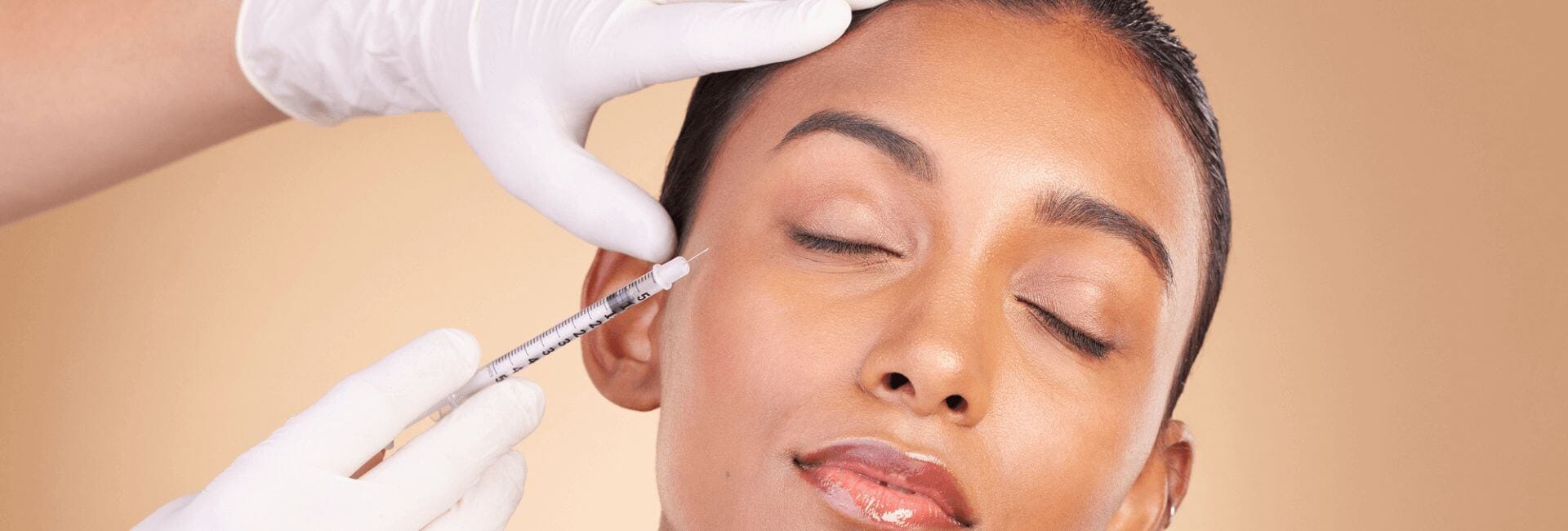
Neuromodulators, including Botox
What it does: Temporarily reduces the muscle contraction that creates expression lines, so the overlying skin creases less.
Best for: Lines between the brows, forehead lines, and crow’s feet. It is a muscle treatment, so it works on lines caused by movement.
Not for: Lines that are visible when your face is completely still with no movement. Those are etched into the skin and need a skin treatment, though the two are often combined.
Sessions: One appointment.
Onset and duration: Effects typically begin within a few days and reach full effect at around two weeks. Duration is commonly in the range of three to four months, and it varies by person, by area, and by dose.
Downtime: Minimal. Small injection marks and occasional bruising. Most people return to normal activity immediately, with some standard activity restrictions for the first several hours that your provider will explain.
Realistic expectation: It softens lines. It should not eliminate all movement unless that is specifically what you asked for and your provider agreed it suits you. Natural results and frozen results are different dosing decisions, and you should say which you want.
Cost structure: Priced per unit. Units required vary by area and by individual anatomy, so ask for an estimated unit count at consultation, not just the per-unit rate.
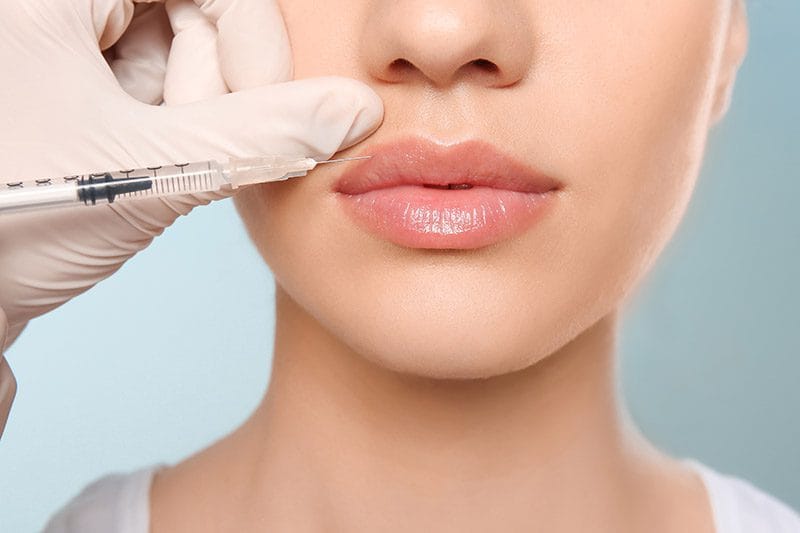
Dermal fillers
What it does: Adds volume using an injectable gel, most commonly hyaluronic acid.
Best for: Volume loss, hollowing, structural support in the cheeks and midface, lip enhancement, and softening deeper folds.
Not for: Fine surface lines and texture. Filler adds structure. It does not resurface.
Sessions: One appointment, sometimes with a follow-up to refine.
Onset and duration: Results are visible immediately, with the final look settling after swelling resolves over a couple of weeks. Duration varies widely by product and by treatment area, commonly in the range of six to eighteen months.
Downtime: Swelling and bruising are common and vary by area. Lips swell more than most people expect for the first few days.
One thing worth knowing: Hyaluronic acid fillers can be dissolved with an enzyme called hyaluronidase if there is a problem or if you dislike the result. This is a meaningful safety feature, and asking whether a clinic keeps it on hand is one of the better questions you can ask before letting anyone inject you.
Sculptra, a collagen stimulator
What it does: Uses poly-L-lactic acid to stimulate your own collagen production over time rather than adding volume directly.
Best for: Gradual, broad restoration of facial volume, especially where the change has been diffuse rather than in one specific hollow.
Sessions: A series, typically spaced weeks apart.
Onset and duration: This is the key difference from standard filler. Results build gradually over months as collagen develops, rather than appearing at the appointment. Results can last substantially longer than hyaluronic acid filler, commonly up to around two years.
Best suited to: People who want a subtle progression that nobody can point to a date for. Not suited to anyone who wants to look different next week.
Kybella
What it does: Uses deoxycholic acid to break down fat cells in the treated area. FDA-approved specifically for fat under the chin.
Sessions: A series, spaced apart.
Downtime: Substantial swelling in the treated area is expected and normal, and it can last a week or more after each session. Plan around it. This is not a lunch break treatment.
Realistic expectation: It targets fat. It does not tighten skin, so if laxity is part of the concern under your chin, that is a separate treatment and worth discussing together.
PDO thread lift
What it does: Places absorbable polydioxanone sutures under the skin to lift tissue and stimulate collagen along the thread path.
Best for: Mild to moderate laxity in people who want lift without surgery.
Not for: Significant sagging. Threads are not a facelift, and any provider suggesting they are equivalent is overselling. There is a point past which a surgical consultation is the honest recommendation, and a good med spa will tell you when you have reached it.
Downtime: Soreness, swelling, and sometimes visible puckering that settles. Activity restrictions for a period afterward.
Duration: Variable, commonly in the range of one to two years.
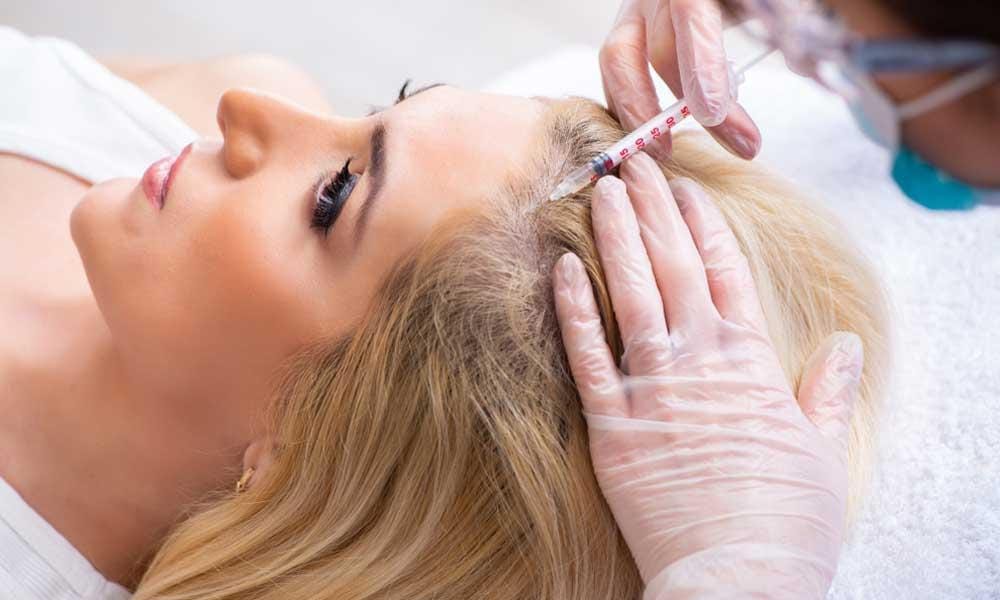
PRP therapy
What it does: Concentrates platelets from a sample of your own blood and reintroduces them to stimulate healing and collagen activity. Used for skin quality and for hair thinning.
Honest framing: PRP is a genuine treatment with a real mechanism, and the published evidence base is still developing, with results varying more between individuals than for many other treatments here. It is reasonable to try. It is not reasonable for anyone to guarantee you a specific outcome from it.
Sessions: A series, with maintenance.
Downtime: Minimal to moderate depending on how it is delivered.
Integrative dry needling
Worth noting because it appears on our menu and it is not a cosmetic treatment. Dry needling addresses musculoskeletal pain and trigger points. If you came for aesthetics, this is not related. If you have muscular pain, it is a separate service worth asking about.
Energy-Based Treatments Explained
RF microneedling, including Morpheus8
What it does: Combines microneedling with radiofrequency energy delivered at depth, so you get both the mechanical collagen response of needling and the thermal remodeling effect of RF in the deeper tissue.
Best for: Skin laxity, texture, acne scarring, and lines that are etched rather than dynamic. It reaches deeper than standard microneedling.
Sessions: Typically a series, commonly around three, spaced several weeks apart.
Onset and duration: Some improvement is visible early, but collagen remodeling is a months-long process, so the real result appears gradually over roughly three to six months after the series.
Downtime: Redness and a sandpapery texture for several days, with swelling in the first day or two. Depth settings change the recovery, and your provider should set expectations for the specific settings used on you.
Note on skin type: RF energy is generally more forgiving across skin types than light-based treatments, because it targets water rather than pigment. Your provider will still assess this individually.
SkinPen microneedling
What it does: Creates controlled micro-injuries that trigger the skin’s own repair and collagen response, without RF energy.
Best for: Texture, fine lines, acne scarring, and overall skin quality. A gentler and less expensive route to some of the same goals as RF microneedling.
Sessions: A series, commonly three to six.
Downtime: Redness for a day or two, like a mild sunburn.
How it differs from Morpheus8: Depth and mechanism. Standard microneedling works the surface and upper dermis mechanically. RF microneedling adds thermal energy deeper. For surface texture, standard microneedling is often sufficient. For laxity and deeper remodeling, RF is the stronger tool.
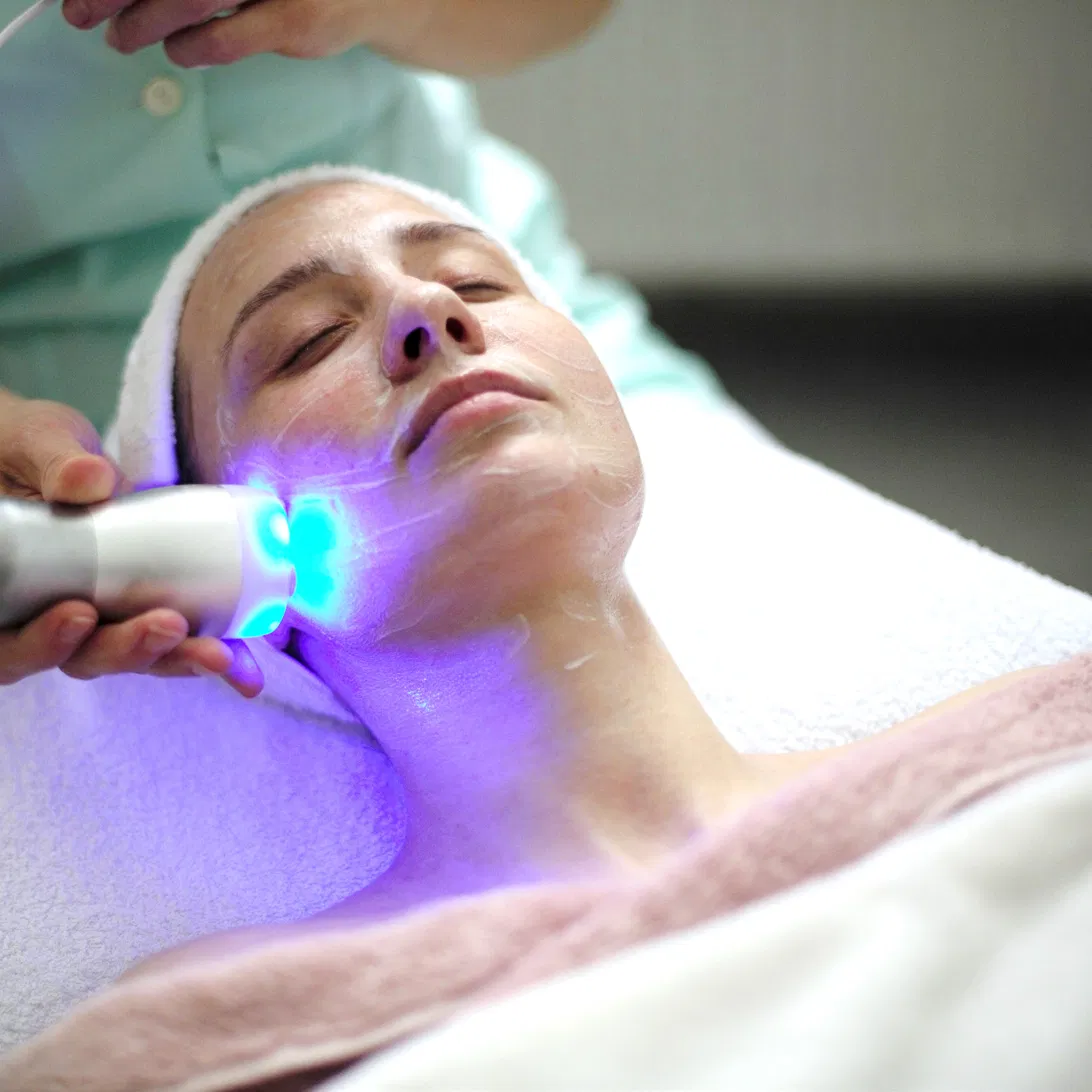
Lumecca IPL and BBL
What they do: Deliver broadband light that is absorbed by pigment and by blood vessels, breaking up sun damage and reducing visible redness.
Best for: Sun spots, freckling from UV damage, uneven pigmentation, facial redness, and visible vessels.
Sessions: Often fewer than people expect for pigment, commonly in the range of one to three, with more for vascular concerns.
Downtime: Treated spots typically darken and look more visible for several days before flaking away. This is the treatment working, and it is worth knowing in advance so it does not alarm you. Plan it away from events.
Important limitation: Light-based treatments target pigment. That is how they work, and it is also why they are not appropriate for every skin type or for skin that is currently tanned. See the skin type section below. This is the single most important safety screening in aesthetics and it should never be skipped.
Laser hair removal, Diolaze XL
What it does: Delivers laser energy absorbed by pigment in the hair follicle, damaging the follicle’s ability to produce hair.
Best for: Reducing hair on legs, arms, underarms, bikini, back, and face.
Sessions: A series, commonly six or more, spaced several weeks apart, because hair grows in cycles and only follicles in the active growth phase respond to a given session. This is why one session never works and why the spacing is not arbitrary.
The honest terminology: The correct regulatory term is permanent hair reduction, not permanent hair removal. Expect a substantial and lasting reduction in the amount and coarseness of hair, with maintenance sessions typically needed over time. Anyone promising you will never shave again is overpromising.
Works best on: Dark, coarse hair, because the laser targets pigment. Grey, white, and very fine blonde hair have little pigment to target and respond poorly regardless of the device.
Preparation matters: Shave the area, do not wax or pluck for a period beforehand, since the follicle needs to be intact, and avoid sun exposure and self-tanner before treatment.
EvolveX body contouring
What it does: Combines radiofrequency for tissue tightening with electrical muscle stimulation for muscle toning, applied to body areas.
Best for: Toning and tightening in areas that resist exercise, as a complement to diet and activity.
Not for: Weight loss. This is a contouring and toning treatment, not a weight management treatment, and it works best on people already close to their target range.
Sessions: A series, delivered over several weeks.
Downtime: None to minimal. Warmth and muscle fatigue afterward, similar to having exercised.
Facials and Resurfacing Explained
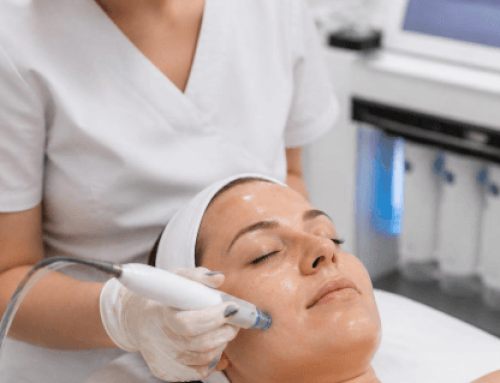
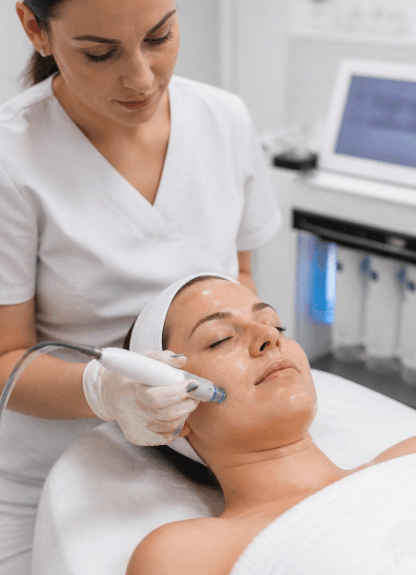
HydraFacial MD
What it does: A multi-step device treatment that cleanses, exfoliates, extracts, and infuses serums in a single session.
Best for: Dullness, congestion, and a general refresh. The reliable choice before an event.
Downtime: None. Skin looks better immediately.
Realistic expectation: The glow is real and it is temporary, typically lasting days to a couple of weeks. This is a maintenance treatment, not a corrective one. Booked monthly it keeps skin in good condition. Booked once it makes you look good on Saturday.
DiamondGlow
What it does: Diamond-tip exfoliation combined with simultaneous extraction and targeted serum infusion.
Best for: The same category as HydraFacial, with the serum selection tailored to your specific concern.
Downtime: None.
Dermaplaning
What it does: Manual exfoliation with a sterile blade, removing dead surface cells and the fine vellus hair on the face.
Best for: Immediate smoothness, and noticeably better makeup application afterward. Also often performed before another treatment, since removing the surface layer helps products penetrate.
Downtime: None.
The question everyone asks: No, the hair does not grow back thicker or darker. Vellus hair grows back exactly as it was. The blunt cut edge can feel different for a few days, which is where the myth comes from.
Chemical peels
What they do: Apply a controlled acid solution to remove surface layers and prompt regeneration underneath.
Best for: Tone, texture, dullness, sun damage, congestion, and fine lines. Peels are one of the most adaptable tools in aesthetics because depth is adjustable.
Depths, and why it matters:
- Superficial peels work the outer layer. Little to no visible peeling, mild flaking. Can be done in a series and fit around normal life
- Medium-depth peels reach further and deliver more correction, with visible peeling for several days
- Deeper peels deliver the most change and the most downtime, and require the most careful assessment
Sessions: Superficial peels work best in a series. Deeper peels are less frequent.
Non-negotiable aftercare: Sun protection. Freshly resurfaced skin is genuinely vulnerable, and sun exposure after a peel is how people end up with worse pigmentation than they started with.
Downtime and Results at a Glance
| Treatment | Downtime | Sessions | When you see results | How long it lasts |
|---|---|---|---|---|
| Neuromodulators | Minimal | One | A few days to two weeks | Commonly 3 to 4 months |
| Dermal fillers | Swelling, possible bruising | One | Immediate, settles in ~2 weeks | Commonly 6 to 18 months |
| Sculptra | Minimal to moderate | Series | Gradual over months | Commonly up to ~2 years |
| Kybella | Significant swelling | Series | Over weeks after each session | Treated fat cells do not return |
| PDO threads | Soreness, swelling | One | Immediate lift, improves | Commonly 1 to 2 years |
| PRP | Minimal to moderate | Series | Gradual | Variable, maintenance needed |
| Morpheus8 RF | Several days redness | Series, often ~3 | Builds over 3 to 6 months | Long-lasting, maintenance advised |
| SkinPen | 1 to 2 days redness | Series, 3 to 6 | Builds over weeks | Maintenance advised |
| IPL and BBL | Darkening then flaking, several days | 1 to 3 for pigment | 1 to 2 weeks per session | Depends on sun exposure after |
| Laser hair removal | Minimal | 6 or more | Progressive across the series | Long-term reduction, maintenance |
| EvolveX | None to minimal | Series | Over the course of the series | Maintenance advised |
| HydraFacial | None | Single or monthly | Immediately | Days to ~2 weeks |
| DiamondGlow | None | Single or monthly | Immediately | Days to ~2 weeks |
| Dermaplaning | None | Every few weeks | Immediately | Weeks |
| Chemical peels | None to a week, by depth | Varies by depth | Days to weeks | Varies |
Ranges are general. Your provider will give you specifics based on your assessment, the product or settings used, and your own physiology.
Skin Type and Why It Matters
The Fitzpatrick scale classifies skin by how it responds to sun exposure, from Type I, which always burns and never tans, through Type VI, which is deeply pigmented and rarely burns. Every reputable provider assesses this before any light-based treatment.
Why it matters: IPL, BBL, and laser hair removal all work by delivering energy that is absorbed by pigment. In deeper skin tones, there is more pigment in the surrounding skin competing to absorb that energy, which raises the risk of burns and of post-inflammatory pigment changes if settings and device selection are wrong.
What this does not mean: It does not mean deeper skin tones cannot be treated. It means device selection, wavelength, and settings must be appropriate, and that the assessment must actually happen. Different laser technologies suit different skin types, and an experienced provider matches the tool to the patient rather than running everyone on the same setting.
What it does mean for you:
- A tan, including a spray tan or recent sun exposure, changes your effective skin type on the day and is a reason to postpone
- A provider who does not assess your skin type before a light-based treatment is skipping a safety step
- If you are told a device is suitable for all skin types, it is fair to ask which wavelength and which settings they use for yours
- A test patch is a reasonable request and a reasonable practice
Sequencing: What Order to Do Things In
When someone has several concerns, the order matters, and doing everything at once is usually the wrong answer.
General principles:
- Correct before you refine. Address the largest structural concern first. Volume and laxity before surface texture, in most cases
- Series treatments start early. Anything requiring three or six sessions needs to begin months before you want the result
- Do not stack aggressive treatments. Skin needs recovery between resurfacing procedures. Combining two energy treatments in the same window is not twice as effective, it is a healing burden
- Some combinations work well together and are often planned deliberately. Your provider will tell you which
- Reassess between sessions. A plan built at consultation should adjust based on how you actually responded
A common misstep: doing a resurfacing treatment right before a big event, on the assumption that more correction means better photos. Most resurfacing looks worse before it looks better. Give it time.
Planning around a date
Work backward:
- Six months out: Start any series treatment, including RF microneedling, laser hair removal, Sculptra, or a peel series
- Three months out: First neuromodulator appointment if you have never had one, so you know how you respond and can adjust dose next time
- Six to eight weeks out: Filler, if you want it fully settled
- Four weeks out: Last neuromodulator appointment
- Two weeks out: Nothing new. Nothing you have not had before
- Week of: A no-downtime facial, HydraFacial, DiamondGlow, or dermaplaning. This is what these treatments are perfect for
The rule underneath all of it: never try a treatment for the first time close to an event. You do not yet know how you respond to it.
What FDA-Approved and FDA-Cleared Actually Mean
You will see both terms in aesthetic advertising, frequently used interchangeably. They are not the same thing, and knowing the difference makes you a better-informed consumer.
FDA-approved applies to drugs and to the highest-risk category of medical devices. It requires the manufacturer to demonstrate safety and effectiveness for a specific intended use through clinical data. Botulinum toxin products, Kybella, Sculptra, and dermal fillers fall in this category.
FDA-cleared applies to devices that go through the 510(k) pathway, where the manufacturer demonstrates that the device is substantially equivalent to a device already legally on the market. Most aesthetic energy devices, including RF microneedling platforms, IPL systems, laser hair removal devices, and body contouring devices, are cleared rather than approved.
Neither term is a bad thing. Clearance is a legitimate regulatory pathway and cleared devices are used safely every day. The point is that the two words mean different things, and precision here is a reasonable expectation.
It also matters that clearance and approval are for specific intended uses. A device cleared for one indication may be used by providers for others. That is legal and common in medicine, and it is called off-label use, but you are entitled to ask whether what is being proposed for you is the on-label use of that product or device.
How to Vet a Med Spa
The med spa category is uneven. Some are medical practices. Some are retail businesses that sell medical procedures. The difference is not visible from the interior design.
Questions worth asking before anyone treats you
- Who will actually perform my treatment, and what is their license? Ask for the specific credential, not a job title
- Is there a medical director, and are they involved in the practice? Injectable treatments involve prescription products, and there should be genuine physician oversight rather than a name on a wall
- Where does the product come from? Legitimate practices purchase directly from the manufacturer or an authorized distributor. Counterfeit and grey-market injectables are a documented problem. You can ask to see the vial
- Do you keep hyaluronidase on site? For anyone injecting hyaluronic acid filler, the answer should be an immediate yes. This is the reversal agent, and it is also the emergency medication for a vascular complication
- What is your protocol if something goes wrong? A real answer describes a process. A vague answer is the answer
- Will you assess my skin type before light-based treatment? The answer should be yes, without hesitation
- Can I see before and after photos of your own work, on patients with skin like mine? Stock manufacturer images are marketing. The practice’s own results are evidence
- What happens at the follow-up? Good practices check results and adjust
Red flags
- Pressure to decide today, or a discount that expires when you leave the room
- A consultation that starts with a package rather than an assessment
- Being sold treatments you did not ask about before your actual concern has been addressed
- No medical history taken
- Guaranteed results. Nobody can guarantee a biological outcome
- Prices dramatically below the local market for injectables, which raises real questions about product sourcing or dilution
- No discussion of risks, side effects, or what happens if you do not like the result
What a real consultation looks like
You should be assessed, listened to, and told what will and will not work for you, including when the honest answer is that a treatment is not appropriate or that your concern is better addressed surgically. You should leave with a plan, a sequence, and an understanding of the cost across the whole plan rather than the first appointment.
You should not leave feeling like you were sold something. If you do, that feeling is information.
Aftercare, and the One Thing That Undoes Everything
Aftercare varies by treatment and your provider will give you specific instructions. Follow theirs over anything general.
Two principles apply almost universally:
Sun protection is not optional. This is the single biggest determinant of whether your results last. It applies especially after any resurfacing, peel, IPL, BBL, or laser treatment, when the skin is more vulnerable and more prone to pigment changes. Daily broad-spectrum SPF, reapplied, is the maintenance treatment that costs the least and protects the most. Spending money on pigmentation treatment and then not protecting the result is the most common way people waste money in aesthetics.
Do not pick, scrub, or accelerate. When skin flakes after a peel or IPL, let it. Pulling it early is how you get scarring and pigment changes in skin that was healing correctly.
Realistic Expectations
The honest boundaries of non-surgical treatment, stated plainly:
- Non-surgical treatments improve. They do not replace surgery. For significant skin laxity, there is a point past which no amount of energy or threads achieves what a surgical procedure would. A good provider will tell you when you are at that point
- Series treatments require the whole series. Stopping at session one of three and concluding it did not work is a common and expensive mistake
- Collagen takes months. Anything working through collagen stimulation, including microneedling, RF, and Sculptra, delivers its real result on a three to six month timeline. Judging it at four weeks is judging it too early
- Maintenance is real. Most results are not permanent. That is not a failure of the treatment, it is how biology works, and it should be in your budget from the start
- Results vary between people. Genetics, age, skin condition, health, smoking, and sun history all affect outcomes. Someone else’s before and after is not a forecast of yours
- Nothing stops aging. These treatments manage its visible effects. Framed correctly, that is a satisfying outcome. Framed as reversal, nothing will satisfy you
Common Mistakes
- Booking a treatment instead of a consultation. You may be buying the wrong solution to the right problem
- Choosing based on what is trending. Popularity is not a diagnosis
- Trying something new right before an event
- Skipping the medical history, or leaving things out because you assume they are irrelevant
- Price shopping injectables. With prescription products, an unusually low price is a question, not a bargain
- Judging a collagen treatment at four weeks
- Stopping a series partway through
- Getting light-based treatment with a tan, including spray tan
- Neglecting sun protection afterward, which reverses the exact thing you paid to correct
- Chasing every concern at once, instead of sequencing properly
Frequently Asked Questions
How do I know which med spa treatment I need?
Start with the concern rather than the treatment, and be specific about it. Lines that only appear when you make an expression are a muscle concern addressed by neuromodulators, while lines visible when your face is still are a skin concern addressed by resurfacing or microneedling. Looking tired is usually volume loss rather than wrinkles, and it is addressed with fillers or collagen stimulators. Dullness is texture, pigmentation is sun damage, and redness is vascular, and each routes to a different treatment. A free consultation exists to make that distinction properly, since most people have more than one concern and need a sequence rather than a single treatment.
What is the difference between Botox and dermal fillers?
They solve opposite problems. Neuromodulators like Botox temporarily reduce the muscle contraction that creates expression lines, so they work on lines caused by movement, typically between the brows, across the forehead, and at the corners of the eyes. Fillers add volume where tissue has been lost, restoring structure in the cheeks and midface, enhancing lips, and softening deeper folds. One relaxes, the other fills. They are frequently used together because most faces show both types of change, but neither substitutes for the other.
What is the difference between Morpheus8 and SkinPen microneedling?
Depth and mechanism. SkinPen creates controlled micro-injuries that trigger the skin’s own collagen response mechanically, working the surface and upper dermis, with a day or two of redness. Morpheus8 adds radiofrequency energy delivered deeper into the tissue, so you get both the needling response and thermal remodeling at depth, with several days of redness. For surface texture and fine lines, standard microneedling is often sufficient and less expensive. For skin laxity and deeper remodeling, RF microneedling is the stronger tool.
How many laser hair removal sessions will I actually need?
Commonly six or more, spaced several weeks apart, because hair grows in cycles and only the follicles in an active growth phase respond to any given session. That spacing is deliberate, not scheduling convenience. The correct term for the outcome is permanent hair reduction rather than removal, meaning you should expect a substantial lasting decrease in the amount and coarseness of hair, with maintenance sessions over time. Laser targets pigment in the hair, so dark coarse hair responds best while grey, white, and very fine blonde hair respond poorly regardless of the device used.
Which treatments have no downtime?
HydraFacial, DiamondGlow, and dermaplaning have essentially none and are the right choice in the week before an event. Neuromodulators have minimal downtime, though bruising is possible. EvolveX body contouring has none to minimal. Microneedling, light peels, and IPL involve a few days of looking flushed or flaking. Kybella and deeper resurfacing involve meaningful swelling or peeling and need to be planned well away from anything you will be photographed at.
How far before my wedding should I start treatments?
Work backward. Begin any series treatment about six months out, including RF microneedling, laser hair removal, Sculptra, or a peel series. Have your first neuromodulator appointment about three months out if you have never had one, so you know how you respond. Filler about six to eight weeks out so it fully settles, and your last neuromodulator appointment about four weeks out. Nothing new within two weeks. In the final week, a no-downtime facial is exactly what these treatments are for. The rule underneath all of it is never to try something for the first time close to the date.
Does my skin type affect which treatments are safe for me?
Yes, particularly for anything light-based. IPL, BBL, and laser hair removal work by delivering energy that pigment absorbs, so in deeper skin tones there is more surrounding pigment competing to absorb that energy, which raises the risk of burns and pigment changes if the device or settings are wrong. This does not mean deeper skin tones cannot be treated, it means device selection, wavelength, and settings have to be appropriate and the assessment has to actually happen. A current tan, including spray tan, changes your effective skin type on the day and is a reason to reschedule.
What does FDA-cleared mean compared to FDA-approved?
FDA-approved applies to drugs and the highest-risk devices, and requires demonstrating safety and effectiveness for a specific use through clinical data. Botulinum toxin products, Kybella, Sculptra, and dermal fillers are approved. FDA-cleared applies to devices going through the 510(k) pathway, where the manufacturer shows the device is substantially equivalent to one already legally marketed, and most aesthetic energy devices including RF microneedling, IPL, laser hair removal, and body contouring platforms are cleared rather than approved. Neither term is a negative. They simply mean different things, and precision is a reasonable expectation from a provider.
How should I choose a med spa?
Ask who will actually perform your treatment and what license they hold, whether there is a medical director genuinely involved in the practice, and where the injectable products are sourced from. Ask whether they keep hyaluronidase on site, since for anyone injecting hyaluronic acid filler that is both the reversal agent and the emergency medication. Ask to see their own before and after photos on patients with skin like yours rather than manufacturer stock images. Walk away from pressure to decide immediately, discounts that expire when you leave, guaranteed results, prices far below the local market for injectables, or any consultation where nobody took a medical history.
What should I tell my provider before treatment?
Whether you are pregnant or breastfeeding, all medications and supplements including blood thinners and anything increasing photosensitivity, any history of cold sores since resurfacing can trigger an outbreak, any tendency to keloid scarring, recent isotretinoin use, autoimmune conditions or immune-suppressing medication, recent sun exposure or a current tan, previous aesthetic treatments anywhere and how you reacted, allergies including to lidocaine, and any neuromuscular condition. Volunteer all of it rather than waiting to be asked, and be cautious of any provider who does not ask about most of it.
Can I combine multiple treatments?
Some combinations are planned deliberately and work well together, and your provider will identify those. What does not work is stacking aggressive treatments in the same window, since combining two resurfacing or energy treatments close together is not twice as effective, it is a healing burden. The general sequence is to correct the largest structural concern first, address volume and laxity before surface texture, start series treatments early because they take months, and reassess between sessions rather than committing to a fixed plan and ignoring how you actually responded.
How long do med spa results last, and do I need maintenance?
It varies by treatment and most results are not permanent. Neuromodulators commonly last three to four months, hyaluronic acid fillers six to eighteen months depending on product and area, Sculptra up to around two years, and PDO threads one to two years. Collagen-stimulating treatments like microneedling and RF microneedling produce longer-lasting change but benefit from maintenance. Facials are maintenance treatments by nature, lasting days to a couple of weeks. Maintenance is not a failure of the treatment, it is how the underlying biology works, and it should be in your budget from the beginning rather than as a surprise.
Why is a treatment quoted per unit or per session, and what will it actually cost me?
Neuromodulators are priced per unit because the amount required depends on your individual anatomy and the areas treated, so a per-unit price alone is not a quote and you should ask for an estimated unit count at consultation. Most energy-based treatments require a series, so a single-session price is not what the treatment costs and you should ask for the full series total. Treatments that need repeating on a schedule should be budgeted annually rather than per appointment, which is exactly why membership pricing exists for recurring treatments.
Book a Free Consultation
The point of a consultation at Elite Med Spa is to work out what you actually need, in what order, at what cost across the whole plan. Sometimes that means recommending less than you came in asking for. Sometimes it means telling you a concern is better addressed somewhere else.
Bring your questions, your medical history, and if you have them, photos of yourself from a few years ago.
Elite Med Spa, 6203 Cermak Rd, Berwyn, IL 60402. Monday through Friday 9 AM to 4 PM, Saturday 9 AM to 2 PM.
Call 855-293-1033 or book online. Consultations are free, and new clients save on their first visit.
Serving Berwyn, Cicero, Oak Park, Forest Park, Riverside, Stickney, Lyons, Countryside, Burbank, Brookfield, La Grange, North Riverside, Broadview, Maywood, Summit, Westchester, and Oak Lawn.

Leave A Comment